Objectives a study of the acute diarrheal disease


Objectives a study of the acute diarrheal disease
A quasi-experimental educational intervention study was conducted in an urban slum of Thakkerbapanagar area of Ahmedabad, India, during August 2011 to March 2012 before and after imparting education about ADD. It consisted of imparting skill-based health education including when to start ORS, how to prepare ORS, and other HAF.
Following were the objectives of the study: (a) assessing baseline knowledge and skill regard- ing management of acute diarrheal diseases (ADDs) among mothers of children <5 years of age; (b) imparting knowledge and skill regarding management of ADD to the mothers; and (c) assessing the impact of education in the form of gain in knowledge and skills of these mothers in preparing oral rehydration salt (ORS).
Study was conducted at Thakkerbapanagar area, which is located in the north zone of the Ahmedabad Municipal Corporation area. Target group for the study comprised mothers of children <5 years of age.
Mothers who were permanent residents of the area and were willing to participate were enrolled for the study whereas those likely to shift from the cluster either to some other places or back to their native villages or those working in out states were excluded.
With the help of health functionaries of the area, a sketch of the area was made. Sampling units con- sisted of households with children <5 years of age. Sampling units were identified as per standard technique of identifying the point of random start by preparing a sketch of the study area. After the start of the survey as soon as the households having children <5 years were identified, the purpose of the study was explained to mothers and other family members. Once they agreed, written consent in the local language was obtained; the mother was enrolled for the study; and the house was marked with an identification sign. A total of 56 mothers agreed to participate in the study.
The study was carried out in three phases: baseline survey, intervention, and end-line survey. During the baseline survey, pretested and semi-structured questionnaire was used for collecting information on knowledge and skills of mothers regarding ADD. With respect to ADD, the ques- tionnaire included questions regarding the knowledge of moth- ers about importance and need of ORT during ADD; correct method of preparation, usage, and feeding of ORS available as packets and HAF; and continuation of breastfeeding during ADD. Knowledge related to management of ADD was assessed using three-point Likert scale. It had three categories of responses: complete knowledge (2 marks), some knowledge (1 mark), and no knowledge (0 mark).
After the completion of the baseline survey, key diarrhea-related issues that needed intervention were identified and the intervention was planned accordingly. For ADD, the main objectives were to sensitize mothers regarding the necessity of oral rehydration, the importance of continuing breastfeeding during ADD, and most importantly, how to prepare and use ORS from the packets available and HAF.
To impart skill-based health education, we held personal discussions with each mother and each session lasted for 30–45 min. It also included demonstrating how to prepare ORS and HAF for the management of ADD. Baseline survey and intervention phase lasted for 2 months.
After imparting skill-based health education, end-line survey was carried out after an interval of 6 months from the baseline survey.
Methods for imparting skill-based health education
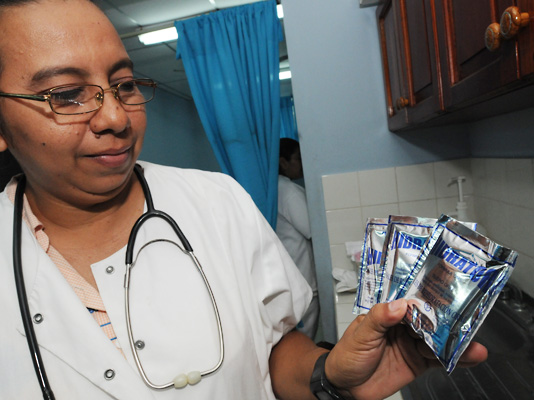
Skill-based health education was imparted using demonstration and carrying out focus group discussions. In addition, available educational material, in the form of posters, flips charts, and flash cards, was used. The prepa- ration of ORS was demonstrated, and the quantity required as per age of the child was explained. The usage of HAF as emphasized, and its preparation was demonstrated by involving the peripheral health worker (link worker) in the community.
Data were entered in an MS Excel worksheet, cleaned, and analyzed in SPSS software, version 19.0. The results were expressed in mean, median, and percentages. Data during the pre- and post-intervention phases were compared to assess the effect of skill-based health education regarding management of ADD in mothers of children <5 years of age.
Ethical consideration
Before the start of the study, requisite permissions were obtained from the department as well as medical officer of Thakkerbapanagar ward. Informed written consent was obtained from all the participants, ensuring confidentiality.